Douglas A. Ferguson dan William J. Adams
Peranan manajer stasiun radio promosi telah berubah secara luar biasa lebih dari setengah abad terakhir ini. Sebelum 1950, sangat sedikit stasiun lokal yang melakukan kegiatan promosi. Persaingan terbatas, dan kebanyakan pemograman berasal dari jaringan, sehingga mereka melakukan promosi, seperti yang sudah ada. Menjelang pertenghan 1950an, stasiun radio telah menciptkan format yang dikhususkan untuk membuat masyarakat sadar akan perubahan pemograman yang penting, beberapa jenis pekerjaan dalam promosi diciptakan pada beberapa stasiun. Tapi para manajer TV yang terdahulu bekerja memproses formulir-formulir pendaftaran kontes dan menghasilkan beberapa promo siaran lebih sedikit dibandingkan sekarang. Para manajer promosi tersebut sering hanya bekerja paruh waktu, melakukan tugas-tugas kesekretarisan dan produksi lainnya, dan membuat pengaruh tak berarti dalam pembuatan keputusan manajerial.
Melewati tahun 1960an, ketika diperketat, citra stasiun menjadi penting. Para manajer membuat identitas yang spesifik untuk stasiun mereka yang menggunakan kombinasi surat panggilan/ posisi tombol penyetel, memogram elemen-elemen (yang menggembar-gemborkan musik yang terkenal dan profil DJ mereka yang berkualitas), dan persaingan pendengar yang berkelanjutan. Persaingan menjadi difokuskan pada menciptakan sebuah citra yang konsisten, baik dalam siaran maupun pengiklanan luar (kesesuaian).
Pada tahun 1970an, mendengarkan FM sangat ditingkatkan sehingga jumlah stasiun aktif yang komersial menjadi dua kali lipat dan kadang tiga kali lipat. Lebih banyak stasiun yang muncul dengan membuat format-format baru dan lebih banyak kompetisi langsung (setidaknya di pastar-pasar besar). Untuk menjaga keberlanjutannya, beberapa mempunyai format identik yang sebenarnya, para menejer promosi harus membangun posisi kompetitif untuk stasiun mereka. Pada tahun 1980an, jumlah stasiun yang mengudara menjadi berlipat ganda. Kompetisi yang lebih kuat mengharuskan strategi-strategi saringan untuk posisioningnya, menempatkan kepercayaan yang lebih besar pada informasi rating dan penelitian citra dan penonton untuk target pendengar yang lebih spesifik.
Pada tahun 1990an, radio melewati gelombang pasang konsolidasi. Eliminasi aturan dan peningkatan duopoly dalam sejumlah stasiun dimana sebuah perusahaan dapat memperoleh peningkatan kekuatan dan kekuasaan manager promosi radio secara signifikan – sekarang disebut menejer pemasaran atau direktur promosi. Situasi banyaknya stasiun dengan format-format yang mirip di pasar dan persaingan agresif diantara kelompok stasiun yang dihasilkan dalam peraturan taktis yang vital untuk tukar promosi dan posisioning yang strategis dari setiap citra stasiun. Tekanan dari kepemilikan (dipaksa oleh investor untuk mengirimkan keuntungan ekonomi yang diharapkan dari konsolidasi) juga berarti bahwa manajer promosi secara meningkat diharapkan untuk menciptakan dan mengatur pemasaran acara yang melibatkan perkembangan nontraditional revenue (NTR), juga merujuk pada non-spot revenue (Potter, Williams, & Newton, 2003).
Manajer promosi yang sekarang terus menyajikan tujuan ganda, pengoperasian pada area antara pemograman dan penjualan, dengan tanggung jawab yang saling melengkapi antar area. Meskipun pemilik kelompok besar mungkin memberikan ide-ide diantara beberapa pasar dan kadang melakukan kontes pasar ganda, sebagian besar tanggub jawab promosi radio tetap berada pada level lokal (tidak seperti pada televisi).
Secara ideal, manajemen ingin mengisi posisi-posisi promosi puncak dengan orang-orang yang termotivasi dan teroganisir dengan baik yang mempunyai ketrampilan di semua area:
Pemasaran
Analisis rating
Pembelian media
Desain penelitian
Posisioning
Penulisan salinan yang kreatif
Inovasi teknologi
Promosi penjualan
Diluar sekian jenis pengalaman, karena direktur promosi harus memenuhi kebutuhan beberapa departemen ganda, kemampuan berpikir secara kreatif dan ketrampilan bernegosiasi harus menjadi bahan kritikan. Dimana promosi pernah rendah dalam flow chart, sekarang mengisi posisi promosi dengan bakat terbaik dapat dilihat sebagai hal yang sangat penting untuk kesuksesan semua stasiun diluar pasar-pasar yang terkecil (dan susunan diotomatiskan secara total).
Sunday, January 9, 2011

Asmirandah Lebih Selektif Memilih Peran

Asmirandah mengungkapkan bahwa dia harus berhati-hati serta selektif dalam memilih peran ke depannya. Pasalnya setelah dia berjilbab di film DALAM MIHRAB CINTA dia harus berkonsekuensi untuk tidak memerankan film yang tidak berjilbab. Andah takut dengan perbandingan yang dibuat orang-orang nanti.
"Karena orang kan pasti membandingkan, kalau pun di sini pakai jilbab terus nanti berperan gak pakai jilbab," ujarnya saat dijumpai di XXI Senayan City, Jakarta Kamis (16/12).
Andah menambahkan bahwa dia tak ingin nantinya berperan yang berubah drastis dari film ini. Dia mencoba sabar meski harus menanti lama tawaran film.
"Tapi harus tetep yang sabar, maksudnya jangan sampai 180 derajat dari karakter sekarang," papar Andah yang tak ingin berperan antagonis lagi.
"Antagonis udah habis, aku kemarin tiga tahun antagonis terus," urainya.
Lebih lanjut Andah menegaskan bahwa dalam menerima tawaran dia tak ingin asal terima saja. Dia ingin menjaga sekali imej yang sudah dibentuknya saat ini. Untuk awal tahun dia lebih menitik beratkan di sinetron saja.
"Aku melihat film itu dari keseluruhan, jangan sampai salah, aku menjaga sekali, jangan kebangetan milih juga tapi yang jelas lebih detail aja. Mungkin awal tahun baru ada buat sinetron aja, film belum," pungkasnya. (kpl/wwn/faj)
source:
http://id.omg.yahoo.com/news/asmirandah-ambil-konsekuensi-dalam-berperan-khjx-0000351278.html
Zac Efron & Vanessa Hudgens Seen 'Making Out' In LA Club
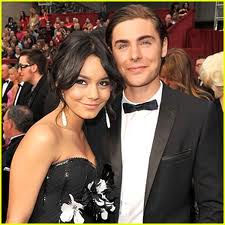
LOS ANGELES, Calif. -- Are Zac Efron and Vanessa Hudgens making sweet music together again?
The former couple, who announced their split just weeks ago, was caught canoodling in LA on Friday night, Access Hollywood has learned.
PLAY IT NOW: T.G.I.F. - Have Ryan Reynolds & Scarlett Johansson Called It Quits? (December 14, 2010)
The easy-on-the-eyes pair headed to SHG's Eden Hollywood on Friday, along with actress pal Brittany Snow, to celebrate the hotspot's grand opening.
Zac and Vanessa reportedly took to the dance floor before "making out on and off for the last hour or so until closing," according to a source for People.
VIEW THE PHOTOS: Divorce! Break-Ups! Hollywood's Most Famous Former Couples
"They acted like there was no one else in the room," the source reportedly added.
As previously reported on Access Hollywood.com, the former Disney stars, who played on-screen couple Troy and Gabriella in the hugely successful "High School Musical" series, split in December after four years together.
"It's nothing dramatic," a source told E! Online's Marc Malkin at the time, who broke news of the split. "There's no third party involved."
VIEW THE PHOTOS: Vanessa Hudgens: From 'High School' Sweetheart To Hollywood Hottie!
Apparently there was no drama in the breakup, another source told Malkin.
"They were together for so long. It just ran its course," the source said.
source:
http://omg.yahoo.com/news/back-on-zac-efron-vanessa-hudgens-seen-making-out-in-la-club/53695
Saturday, January 8, 2011
NAMIKAZE
Namikaze adalah Wadah atau tempat para pencinta hal-hal yang berhubungan dengan jepang. Namikaze sendiri berasal dari bahasa jepang yang mempunyai beberapa arti yaitu * Gelombang dan angin *
Mengapa komunitas namikaze dibentuk? Karena dikota magelang belum ditemukan komunitas yang berhubungan dengan jepang, jadi mereka sebagai pecinta negeri sakura ini, membentuk sebuah komunitas untuk berkumpul dan bertukar informasi mengenai jepang! Terbentuknya komunitas namikaze…? Tanggal 20 febuari 2009.
Persyaratan masuk komunitas namikaze…? * membuat biodata diri * membawa foto berwarna ukuran min 2R * membuat desain baju( seperti harajuku, eruguro, gothic, EGA, ganguro, kogal, cosplay, visual key, decora, oshare key, Lolita, dll) * surat ijin dari orang tua ato wali.
Tujuan dari komunitas namikaze…? Secara garis besar tujuan komunitas namikaze ada 2 yaitu:
1. Tujuan jangka panjang mengadakan event ato jafest pertama di kota magelang.
2. Tujuan jangka pendek adalah memperkenalkan kebudayaan jepang pada masyarakat luas khususnya masyarakat magelang tercinta ini.
Visi dan Misi dari komunitas namikaze Dapat menjadikan trendsetter bagi masyarakat luas khususnya masyarakat kota magelang.
Bagi sebagian orang mungkin kebudayaan jepang itu aneh, padahal kebudayaan jepang itu sangat unik dan menarik untuk dipelajari, oleh karena itu kita sebagai japanholic harus memperkenalkan kebudayaan jepang yang penuh dengan keunikan. Menyebarkan virus jepang Semua mengenai jepang dari musik, movie, costum, sampai pada kebudayaan jepang yang menyeluruh. menjalin persahabatan dan persaudaraan diantara pecinta jepang.
Peraturan yang diterapkan dikomunitas namikaze
* Jaga nama baik komunitas dimana saja dan kapan saja
* Dilarang membawa dan mengkonsumsi miras atau yang berakohol dan obat-obatan terlarang seperti narkoba
* Tidak boleh individualisme, harus mengutamakan komunitas
* Datang tepat waktu saat jadwal kumpul, jika terlambat atau tidak datang wajib beri kabar sebelumnya
* Berbagi informasi mengenai semua tentang jepang
* Beri saran kritik untuk perkembangan n kemajuan komunitas namikaze
Event yang pernah diikuti oleh komunitas namikaze
* Mengikuti lomba cosplay diacara robotfest di GSB di kampus UGM jogjakarta
* menghadiri acara ulang tahun komunitas ONEGAI di taman kuliner condong catur ` Jogjakarta
* Tanggal 24 mei 2009 : Mengikuti lomba cosplay battle sekomunitas di Surakarta
* Tangal 2 agustus 2009 : Bonkasai di SMA N 7 jogjakarta (Mengikuti cosplay n Biocosplay bersama.)
* Tanggal 4 agustus 2009 : Touring kepantai pantai diGunung kidul jogjakarta.
* Tanggal13 november 2009 : menghadiri pembukaan di Harajuku salon di cafe Kebon Tebu magelang
* Tanggal 14-15 november 2009 : mengikuti jfeshion KIMOCHI FEST di UKDW jogjakarta,
* Tanggal 2 januari 2010 : touring ke pantai sundak, drini,kukup bersama Tim ALBATROSS jogjakarta, Tour dalam rangka perkenalan antar komunitas dan mempererat persahabatan diantara anggota komunitas, Kegiatan kegiatan komunitas namikaze
* Kumpulan rutin setiap satu minggu sekali hari sabtu atau minggu jam 16.00 WIB dibase camp dan dua minggu sekali kumpulan diluar base camp atau ditempat keramaian seperti dialon-alon kota magelang sambil mengenakan costum jepang atau cosplay.
* Setiap kumpulan selalu membahas event yang akan berlangsung
* Tiap seminggu sekali juga diadakan latihan para-para(tarian jepang), band, dan cabaret atau drama jejepangan.
* Selalu update perkembangan tentang jepang
Basecamp komunitas namikaze…? jalan mertoyudo mantenan RT03 RW 01 No 144 mertoyudan magelang jawa tengah.
Koleksi foto anak-anak namikaze Bisa dilihat di blog kami namikazewithlove.blogspot.com Namikaze Shop komunitas namikaze juga menjual berbagai macam accesoris mengenai jepang, melayani pemesanan baju atau costum atau cosplay, sepatu harajuku, dalam bentuk disc melayani pemesanan movie, musik, video konser live ato PV ato video clip(format DVD atau VCD), Atau bisa dilihat difacebook shop qta namikaze@asia.com. Contact person : joeshinjie 085643664140 Facebook : komunitas_namikaze@japan.com E-mail : namikaze79@yahoo.com Blog : namikazewithlove.blogspot.com
Mengapa komunitas namikaze dibentuk? Karena dikota magelang belum ditemukan komunitas yang berhubungan dengan jepang, jadi mereka sebagai pecinta negeri sakura ini, membentuk sebuah komunitas untuk berkumpul dan bertukar informasi mengenai jepang! Terbentuknya komunitas namikaze…? Tanggal 20 febuari 2009.
Persyaratan masuk komunitas namikaze…? * membuat biodata diri * membawa foto berwarna ukuran min 2R * membuat desain baju( seperti harajuku, eruguro, gothic, EGA, ganguro, kogal, cosplay, visual key, decora, oshare key, Lolita, dll) * surat ijin dari orang tua ato wali.
Tujuan dari komunitas namikaze…? Secara garis besar tujuan komunitas namikaze ada 2 yaitu:
1. Tujuan jangka panjang mengadakan event ato jafest pertama di kota magelang.
2. Tujuan jangka pendek adalah memperkenalkan kebudayaan jepang pada masyarakat luas khususnya masyarakat magelang tercinta ini.
Visi dan Misi dari komunitas namikaze Dapat menjadikan trendsetter bagi masyarakat luas khususnya masyarakat kota magelang.
Bagi sebagian orang mungkin kebudayaan jepang itu aneh, padahal kebudayaan jepang itu sangat unik dan menarik untuk dipelajari, oleh karena itu kita sebagai japanholic harus memperkenalkan kebudayaan jepang yang penuh dengan keunikan. Menyebarkan virus jepang Semua mengenai jepang dari musik, movie, costum, sampai pada kebudayaan jepang yang menyeluruh. menjalin persahabatan dan persaudaraan diantara pecinta jepang.
Peraturan yang diterapkan dikomunitas namikaze
* Jaga nama baik komunitas dimana saja dan kapan saja
* Dilarang membawa dan mengkonsumsi miras atau yang berakohol dan obat-obatan terlarang seperti narkoba
* Tidak boleh individualisme, harus mengutamakan komunitas
* Datang tepat waktu saat jadwal kumpul, jika terlambat atau tidak datang wajib beri kabar sebelumnya
* Berbagi informasi mengenai semua tentang jepang
* Beri saran kritik untuk perkembangan n kemajuan komunitas namikaze
Event yang pernah diikuti oleh komunitas namikaze
* Mengikuti lomba cosplay diacara robotfest di GSB di kampus UGM jogjakarta
* menghadiri acara ulang tahun komunitas ONEGAI di taman kuliner condong catur ` Jogjakarta
* Tanggal 24 mei 2009 : Mengikuti lomba cosplay battle sekomunitas di Surakarta
* Tangal 2 agustus 2009 : Bonkasai di SMA N 7 jogjakarta (Mengikuti cosplay n Biocosplay bersama.)
* Tanggal 4 agustus 2009 : Touring kepantai pantai diGunung kidul jogjakarta.
* Tanggal13 november 2009 : menghadiri pembukaan di Harajuku salon di cafe Kebon Tebu magelang
* Tanggal 14-15 november 2009 : mengikuti jfeshion KIMOCHI FEST di UKDW jogjakarta,
* Tanggal 2 januari 2010 : touring ke pantai sundak, drini,kukup bersama Tim ALBATROSS jogjakarta, Tour dalam rangka perkenalan antar komunitas dan mempererat persahabatan diantara anggota komunitas, Kegiatan kegiatan komunitas namikaze
* Kumpulan rutin setiap satu minggu sekali hari sabtu atau minggu jam 16.00 WIB dibase camp dan dua minggu sekali kumpulan diluar base camp atau ditempat keramaian seperti dialon-alon kota magelang sambil mengenakan costum jepang atau cosplay.
* Setiap kumpulan selalu membahas event yang akan berlangsung
* Tiap seminggu sekali juga diadakan latihan para-para(tarian jepang), band, dan cabaret atau drama jejepangan.
* Selalu update perkembangan tentang jepang
Basecamp komunitas namikaze…? jalan mertoyudo mantenan RT03 RW 01 No 144 mertoyudan magelang jawa tengah.
Koleksi foto anak-anak namikaze Bisa dilihat di blog kami namikazewithlove.blogspot.com Namikaze Shop komunitas namikaze juga menjual berbagai macam accesoris mengenai jepang, melayani pemesanan baju atau costum atau cosplay, sepatu harajuku, dalam bentuk disc melayani pemesanan movie, musik, video konser live ato PV ato video clip(format DVD atau VCD), Atau bisa dilihat difacebook shop qta namikaze@asia.com. Contact person : joeshinjie 085643664140 Facebook : komunitas_namikaze@japan.com E-mail : namikaze79@yahoo.com Blog : namikazewithlove.blogspot.com
Tuesday, April 21, 2009
Purpose of Art
Art has had a great number of different functions throughout its history, making its purpose difficult to abstract or quantify to any single concept. This does not imply that the purpose of Art is "vague", but that it has had many unique, different, reasons for being created. Some of these functions of Art are provided in the following outline. The different purposes of art may be grouped according to those which are non-motivated, and those which are motivated (Levi-Strauss).
Non-Motivated Functions of Art
The non-motivated purposes of Art are those which are integral to being human, transcend the individual, or do not fulfill a specific external purpose. Aristotle has said, "Imitation, then, is one instinct of our nature." In this sense, Art, as creativity, is something which humans must do by their very nature (i.e. no other species creates art), and is therefore beyond utility.
Basic human instinct for harmony, balance, rhythm. Art at this level is not an action or an object, but an internal appreciation of balance and harmony (beauty), and therefore an aspect of being human beyond utility.
"Imitation, then, is one instinct of our nature. Next, there is the instinct for 'harmony' and rhythm, meters being manifestly sections of rhythm. Persons, therefore, starting with this natural gift developed by degrees their special aptitudes, till their rude improvisations gave birth to Poetry." -Aristotle
Experience of the mysterious. Art provides us with a way to experience ourselves in relation to the universe. This experience may often come unmotivated, as we appreciate art, music or poetry.
"The most beautiful thing we can experience is the mysterious. It is the source of all true art and science." -Albert Einstein
Expression of the imagination. Art provide a means to express the imagination in non-grammatic ways that are not tied to the formality of spoken or written language. Unlike words, which come in sequences and each of which have a definite meaning, art provides a range of forms, symbols and ideas with meanings that are maleable.
"Jupiter's eagle [as an example of art] is not, like logical (aesthetic) attributes of an object, the concept of the sublimity and majesty of creation, but rather something else - something that gives the imagination an incentive to spread its flight over a whole host of kindred representations that provoke more thought than admits of expression in a concept determined by words. They furnish an aesthetic idea, which serves the above rational idea as a substitute for logical presentation, but with the proper function, however, of animating the mind by opening out for it a prospect into a field of kindred representations stretching beyond its ken." -Immanuel Kant
Universal communication. Art allows the individual to express things toward the world as a whole. Earth Artists often create art in remote locations that will never be experienced by another person. The practice of placing a cairn, or pile of stones at the top of a mountain, is an example. (Note: This need not suggest a particular view of God, or religion.) Art created in this way is a form of communication between the individual and the world as a whole.
Ritualistic and symbolic functions. In many cultures, art is used in rituals, performances and dances as a decoration or symbol. While these often have no specific utilitarian (motivated) purpose, anthropologists know that they often serve a purpose at the level of meaning within a particular culture. This meaning is not furnished by any one individual, but is often the result of many generations of change, and of a cosmological relationship within the culture.
"Most scholars who deal with rock paintings or objects recovered from prehistoric contexts that cannot be explained in utilitarian terms and are thus categorized as decorative, ritual or symbolic, are aware of the trap posed by the term 'art'." -Silva Tomaskova
Motivated Functions of Art
The purposes of art which are motivated refer to intentional, conscious actions on the part of the artists or creator. These may be to bring about political change, to comment on an aspect of society, to convey a specific emotion or mood, to address personal psychology, to illustrate another discipline, to (with commercial arts) to sell a product, or simply as a form of communication.
Communication. Art, at its simplest, is a form of communication. As most forms of communication have an intent or goal directed toward another individual, this is a motivated purpose. Illustrative arts, such as scientific illustration, are a form of art as communication. Maps are another example. However, the content need not be scientific. Emotions, moods and feelings are also communicated through art.
"[Art is a set of] artefacts or images with symbolic meanings as a means of communication." -Steve Mithen[26]
Art as Entertainment. Art may seek to bring about a particular emotion or mood, for the purpose of relaxing or entertaining the viewer. This is often the function of the art industries of Motion Pictures and Video Games.
The Avante-Garde. Art for political change. One of the defining functions of early twentieth century art has been to use visual images to bring about political change. The art movements which had this goal - Dadaism, Surrealism, Russian Constructivism, and Abstract Expressionism, among others - are collectively referred to as the avante-garde arts.
"By contrast, the realistic attitude, inspired by positivism, from Saint Thomas Aquinas to Anatole France, clearly seems to me to be hostile to any intellectual or moral advancement. I loathe it, for it is made up of mediocrity, hate, and dull conceit. It is this attitude which today gives birth to these ridiculous books, these insulting plays. It constantly feeds on and derives strength from the newspapers and stultifies both science and art by assiduously flattering the lowest of tastes; clarity bordering on stupidity, a dog’s life." -Andre Breton (Surrealism)[27]
Art for psychological and healing purposes. Art is also used by art therapists, psychotherapists and clinical psychologists as art therapy. The Diagnostic Drawing Series, for example, is used to determine the personality and emotional functioning of a patient. The end product is not the principal goal in this case, but rather a process of healing, through creative acts, is sought. The resultant piece of artwork may also offer insight into the troubles experienced by the subject and may suggest suitable approaches to be used in more conventional forms of psychiatric therapy.
Art for social inquiry, subversion and/or anarchy. While similar to art for political change, subversive or deconstructivist art may seek to question aspects of society without any specific political goal. In this case, the function of art may be simply to criticize some aspect of society.
Non-Motivated Functions of Art
The non-motivated purposes of Art are those which are integral to being human, transcend the individual, or do not fulfill a specific external purpose. Aristotle has said, "Imitation, then, is one instinct of our nature." In this sense, Art, as creativity, is something which humans must do by their very nature (i.e. no other species creates art), and is therefore beyond utility.
Basic human instinct for harmony, balance, rhythm. Art at this level is not an action or an object, but an internal appreciation of balance and harmony (beauty), and therefore an aspect of being human beyond utility.
"Imitation, then, is one instinct of our nature. Next, there is the instinct for 'harmony' and rhythm, meters being manifestly sections of rhythm. Persons, therefore, starting with this natural gift developed by degrees their special aptitudes, till their rude improvisations gave birth to Poetry." -Aristotle
Experience of the mysterious. Art provides us with a way to experience ourselves in relation to the universe. This experience may often come unmotivated, as we appreciate art, music or poetry.
"The most beautiful thing we can experience is the mysterious. It is the source of all true art and science." -Albert Einstein
Expression of the imagination. Art provide a means to express the imagination in non-grammatic ways that are not tied to the formality of spoken or written language. Unlike words, which come in sequences and each of which have a definite meaning, art provides a range of forms, symbols and ideas with meanings that are maleable.
"Jupiter's eagle [as an example of art] is not, like logical (aesthetic) attributes of an object, the concept of the sublimity and majesty of creation, but rather something else - something that gives the imagination an incentive to spread its flight over a whole host of kindred representations that provoke more thought than admits of expression in a concept determined by words. They furnish an aesthetic idea, which serves the above rational idea as a substitute for logical presentation, but with the proper function, however, of animating the mind by opening out for it a prospect into a field of kindred representations stretching beyond its ken." -Immanuel Kant
Universal communication. Art allows the individual to express things toward the world as a whole. Earth Artists often create art in remote locations that will never be experienced by another person. The practice of placing a cairn, or pile of stones at the top of a mountain, is an example. (Note: This need not suggest a particular view of God, or religion.) Art created in this way is a form of communication between the individual and the world as a whole.
Ritualistic and symbolic functions. In many cultures, art is used in rituals, performances and dances as a decoration or symbol. While these often have no specific utilitarian (motivated) purpose, anthropologists know that they often serve a purpose at the level of meaning within a particular culture. This meaning is not furnished by any one individual, but is often the result of many generations of change, and of a cosmological relationship within the culture.
"Most scholars who deal with rock paintings or objects recovered from prehistoric contexts that cannot be explained in utilitarian terms and are thus categorized as decorative, ritual or symbolic, are aware of the trap posed by the term 'art'." -Silva Tomaskova
Motivated Functions of Art
The purposes of art which are motivated refer to intentional, conscious actions on the part of the artists or creator. These may be to bring about political change, to comment on an aspect of society, to convey a specific emotion or mood, to address personal psychology, to illustrate another discipline, to (with commercial arts) to sell a product, or simply as a form of communication.
Communication. Art, at its simplest, is a form of communication. As most forms of communication have an intent or goal directed toward another individual, this is a motivated purpose. Illustrative arts, such as scientific illustration, are a form of art as communication. Maps are another example. However, the content need not be scientific. Emotions, moods and feelings are also communicated through art.
"[Art is a set of] artefacts or images with symbolic meanings as a means of communication." -Steve Mithen[26]
Art as Entertainment. Art may seek to bring about a particular emotion or mood, for the purpose of relaxing or entertaining the viewer. This is often the function of the art industries of Motion Pictures and Video Games.
The Avante-Garde. Art for political change. One of the defining functions of early twentieth century art has been to use visual images to bring about political change. The art movements which had this goal - Dadaism, Surrealism, Russian Constructivism, and Abstract Expressionism, among others - are collectively referred to as the avante-garde arts.
"By contrast, the realistic attitude, inspired by positivism, from Saint Thomas Aquinas to Anatole France, clearly seems to me to be hostile to any intellectual or moral advancement. I loathe it, for it is made up of mediocrity, hate, and dull conceit. It is this attitude which today gives birth to these ridiculous books, these insulting plays. It constantly feeds on and derives strength from the newspapers and stultifies both science and art by assiduously flattering the lowest of tastes; clarity bordering on stupidity, a dog’s life." -Andre Breton (Surrealism)[27]
Art for psychological and healing purposes. Art is also used by art therapists, psychotherapists and clinical psychologists as art therapy. The Diagnostic Drawing Series, for example, is used to determine the personality and emotional functioning of a patient. The end product is not the principal goal in this case, but rather a process of healing, through creative acts, is sought. The resultant piece of artwork may also offer insight into the troubles experienced by the subject and may suggest suitable approaches to be used in more conventional forms of psychiatric therapy.
Art for social inquiry, subversion and/or anarchy. While similar to art for political change, subversive or deconstructivist art may seek to question aspects of society without any specific political goal. In this case, the function of art may be simply to criticize some aspect of society.
Art theories
In the nineteenth century, artists were primarily concerned with ideas of truth and beauty. The aesthetic theorist John Ruskin, who championed what he saw as the naturalism of J. M. W. Turner, saw art's role as the communication by artifice of an essential truth that could only be found in nature.
The Burning of the Houses of Parliament; J. M. W. Turner, 1834
The definition and evaluation of art has become especially problematic since the 20th century. Richard Wollheim distinguishes three approaches: the Realist, whereby aesthetic quality is an absolute value independent of any human view; the Objectivist, whereby it is also an absolute value, but is dependent on general human experience; and the Relativist position, whereby it is not an absolute value, but depends on, and varies with, the human experience of different humans.
The arrival of Modernism in the late nineteenth century lead to a radical break in the conception of the function of art,and then again in the late twentieth century with the advent of postmodernism. Clement Greenberg's 1960 article "Modernist Painting" defines Modern Art as "the use of characteristic methods of a discipline to criticize the discipline itself". Greenberg originally applied this idea to the Abstract Expressionist movement and used it as a way to understand and justify flat (non-illusionistic) abstract painting:
Realistic, naturalistic art had dissembled the medium, using art to conceal art; modernism used art to call attention to art. The limitations that constitute the medium of painting – the flat surface, the shape of the support, the properties of the pigment — were treated by the Old Masters as negative factors that could be acknowledged only implicitly or indirectly. Under Modernism these same limitations came to be regarded as positive factors, and were acknowledged openly.
After Greenberg, several important art theorists emerged, such as Michael Fried, T. J. Clark, Rosalind Krauss, Linda Nochlin and Griselda Pollock among others. Though only originally intended as a way of understanding a specific set of artists, Greenberg's definition of Modern Art is important to many of the ideas of art within the various art movements of the 20th century and early 21st century.
Pop artists like Andy Warhol became both noteworthy and influential through work including and possibly critiquing popular culture, as well as the art world. Certain radical artists of the 1980s, 1990s, and 2000s expanded this technique of self-criticism beyond high art to all cultural image-making, including fashion images, comics, billboards and pornography.
The Burning of the Houses of Parliament; J. M. W. Turner, 1834
The definition and evaluation of art has become especially problematic since the 20th century. Richard Wollheim distinguishes three approaches: the Realist, whereby aesthetic quality is an absolute value independent of any human view; the Objectivist, whereby it is also an absolute value, but is dependent on general human experience; and the Relativist position, whereby it is not an absolute value, but depends on, and varies with, the human experience of different humans.
The arrival of Modernism in the late nineteenth century lead to a radical break in the conception of the function of art,and then again in the late twentieth century with the advent of postmodernism. Clement Greenberg's 1960 article "Modernist Painting" defines Modern Art as "the use of characteristic methods of a discipline to criticize the discipline itself". Greenberg originally applied this idea to the Abstract Expressionist movement and used it as a way to understand and justify flat (non-illusionistic) abstract painting:
Realistic, naturalistic art had dissembled the medium, using art to conceal art; modernism used art to call attention to art. The limitations that constitute the medium of painting – the flat surface, the shape of the support, the properties of the pigment — were treated by the Old Masters as negative factors that could be acknowledged only implicitly or indirectly. Under Modernism these same limitations came to be regarded as positive factors, and were acknowledged openly.
After Greenberg, several important art theorists emerged, such as Michael Fried, T. J. Clark, Rosalind Krauss, Linda Nochlin and Griselda Pollock among others. Though only originally intended as a way of understanding a specific set of artists, Greenberg's definition of Modern Art is important to many of the ideas of art within the various art movements of the 20th century and early 21st century.
Pop artists like Andy Warhol became both noteworthy and influential through work including and possibly critiquing popular culture, as well as the art world. Certain radical artists of the 1980s, 1990s, and 2000s expanded this technique of self-criticism beyond high art to all cultural image-making, including fashion images, comics, billboards and pornography.
Monday, April 20, 2009
What is Art?
Art is the process or product of deliberately arranging elements in a way that appeals to the senses or emotions. It encompasses a diverse range of human activities, creations, and modes of expression, including music and literature. The meaning of art is explored in a branch of philosophy known as Aesthetics.
The definition and evaluation of art has become especially problematic since the early 20th century. Richard Wollheim distinguishes three approaches: the Realist, whereby aesthetic quality is an absolute value independent of any human view; the Objectivist, whereby it is also an absolute value, but is dependent on general human experience; and the Relativist position, whereby it is not an absolute value, but depends on, and varies with, the human experience of different humans.
An object may be characterized by the intentions, or lack thereof, of its creator, regardless of its apparent purpose. A cup, which ostensibly can be used as a container, may be considered art if intended solely as an ornament, while a painting may be deemed craft if mass-produced.
Traditionally, the term art was used to refer to any skill or mastery. This conception changed during the Romantic period, when art came to be seen as "a special faculty of the human mind to be classified with religion and science".
Generally, art is made with the intention of stimulating thoughts and emotions.
The nature of art has been described by Richard Wollheim as "one of the most elusive of the traditional problems of human culture". It has been defined as a vehicle for the expression or communication of emotions and ideas, a means for exploring and appreciating formal elements for their own sake, and as mimesis or representation.Leo Tolstoy identified art as a use of indirect means to communicate from one person to another. Benedetto Croce and R.G. Collingwood advanced the idealist view that art expresses emotions, and that the work of art therefore essentially exists in the mind of the creator. The theory of art as form has its roots in the philosophy of Immanuel Kant, and was developed in the early twentieth century by Roger Fry and Clive Bell. Art as mimesis or representation has deep roots in the philosophy of Aristotle.
The definition and evaluation of art has become especially problematic since the early 20th century. Richard Wollheim distinguishes three approaches: the Realist, whereby aesthetic quality is an absolute value independent of any human view; the Objectivist, whereby it is also an absolute value, but is dependent on general human experience; and the Relativist position, whereby it is not an absolute value, but depends on, and varies with, the human experience of different humans.
An object may be characterized by the intentions, or lack thereof, of its creator, regardless of its apparent purpose. A cup, which ostensibly can be used as a container, may be considered art if intended solely as an ornament, while a painting may be deemed craft if mass-produced.
Traditionally, the term art was used to refer to any skill or mastery. This conception changed during the Romantic period, when art came to be seen as "a special faculty of the human mind to be classified with religion and science".
Generally, art is made with the intention of stimulating thoughts and emotions.
The nature of art has been described by Richard Wollheim as "one of the most elusive of the traditional problems of human culture". It has been defined as a vehicle for the expression or communication of emotions and ideas, a means for exploring and appreciating formal elements for their own sake, and as mimesis or representation.Leo Tolstoy identified art as a use of indirect means to communicate from one person to another. Benedetto Croce and R.G. Collingwood advanced the idealist view that art expresses emotions, and that the work of art therefore essentially exists in the mind of the creator. The theory of art as form has its roots in the philosophy of Immanuel Kant, and was developed in the early twentieth century by Roger Fry and Clive Bell. Art as mimesis or representation has deep roots in the philosophy of Aristotle.
No word on paparazzi in police log on Madonna fall
No word on paparazzi in police log on Madonna fall
AP, Apr 20, 2009 10:17 pm PDT
A police report on Madonna's fall from a horse in the Hamptons is silent on whether paparazzi scared the animal, as her spokeswoman has said.
The Southampton Town police report says only that the pop superstar "was a victim of a fall from a horse" Saturday and was taken to Southampton Hospital with "unknown injuries." It's unclear whether she told police anything about the circumstances surrounding the accident.
The 50-year-old singer was treated for minor injuries and bruises, according to her spokeswoman, Liz Rosenberg.
Rosenberg has said paparazzi leaped out of some bushes and startled the horse Madonna was riding in Bridgehampton, a haven for celebrities and the wealthy on Long Island's eastern end.
Photographer Thomas Hinton has said Madonna's host, Steven Klein, was the only photographer around when the singer fell. Hinton said he made pictures of Madonna from a public road before and after the accident but wasn't there when she fell.
Rosenberg said Monday she was unsure whether Madonna spoke to police about the incident but the singer stands by her statement.
"Isn't it kind of ridiculous that (photographers are) saying that they're not there when there are all of these pictures?" Rosenberg asked.
The "Material Girl" and "Like a Virgin" singer also was thrown from a horse in England in the summer of 2005, cracking three ribs and breaking her collarbone and a hand.
A couple of months later, she and talk show host David Letterman rode horses outside his studio as part of her appearance on CBS' the "Late Show with David Letterman" on CBS.
http://new.music.yahoo.com/madonna/news/no-word-on-paparazzi-in-police-log-on-madonna-fall--12176836
AP, Apr 20, 2009 10:17 pm PDT
A police report on Madonna's fall from a horse in the Hamptons is silent on whether paparazzi scared the animal, as her spokeswoman has said.
The Southampton Town police report says only that the pop superstar "was a victim of a fall from a horse" Saturday and was taken to Southampton Hospital with "unknown injuries." It's unclear whether she told police anything about the circumstances surrounding the accident.
The 50-year-old singer was treated for minor injuries and bruises, according to her spokeswoman, Liz Rosenberg.
Rosenberg has said paparazzi leaped out of some bushes and startled the horse Madonna was riding in Bridgehampton, a haven for celebrities and the wealthy on Long Island's eastern end.
Photographer Thomas Hinton has said Madonna's host, Steven Klein, was the only photographer around when the singer fell. Hinton said he made pictures of Madonna from a public road before and after the accident but wasn't there when she fell.
Rosenberg said Monday she was unsure whether Madonna spoke to police about the incident but the singer stands by her statement.
"Isn't it kind of ridiculous that (photographers are) saying that they're not there when there are all of these pictures?" Rosenberg asked.
The "Material Girl" and "Like a Virgin" singer also was thrown from a horse in England in the summer of 2005, cracking three ribs and breaking her collarbone and a hand.
A couple of months later, she and talk show host David Letterman rode horses outside his studio as part of her appearance on CBS' the "Late Show with David Letterman" on CBS.
http://new.music.yahoo.com/madonna/news/no-word-on-paparazzi-in-police-log-on-madonna-fall--12176836
Wednesday, February 4, 2009
The Meaning of Art
Art is art that formed a branch of art with media that can be perceived by the eye and with palpation. This impression was created with the concept of process line, field, form, volume, color, texture, and lighting with the aesthetic preferences. Art divided into three categories, that is pure art, skill, and design. Pure art refers to works that are only for the purpose of satisfaction time, while the skill and design more focused functionality and ease of production. A rough translation art in English is fine art. However, according to the development of modern art, the term fine art to be more specific to the understanding of art for the pure and combine them with skill to design and visual arts in criticism. * Art painting * Graphic Arts * Art sculpture * Art installation * Art show * Art ceramics * Arts film * Arts choreography * Art photography Design * Architecture * Graphic Design * Interior Design * Design clothes * Design products Kriya Rattan chair as a result of skill * Kriya textiles * Kriya wood * Kriya ceramics * Kriya rattan | ||
Monday, January 26, 2009
Oliver Twist
Nearly every inhabitant of the Western World is familiar with Charles Dickens' Oliver Twist. A classic ideal of beaten-down childhood, Oliver's an impossibly knocked around orphan who goes from factory laborer to apprentice/slave to runaway to hapless and hungry pickpocket—and then to charity case, abduction victim, and, at last, virtuous and wealthy pint-sized gentleman.
Roman Polanski, coming off of 2002's The Pianist, is a tantalizing figure for Oliver Twist's most recent reinterpretation. (By the way, who the hell is demanding that this particular story be retold with such regularity?) But Polanski directs a wax museum of a film, telling the story in a rote, straightforward manner. Some will appreciate this preservation, while others will take issue with the fact that Polanski doesn't bother with what seems an obligatory acknowledgement of the anti-Semitism found in the novel (as directed towards Ben Kingsley's Fagin, the elderly ringleader of the urchin pickpockets).
But what's more important than either of those perspectives is the fact that there's something lifeless in Polanski's Oliver Twist, despite the appearance of all the tools and resources being . The availablesets and cinematography are a beautiful, imaginative rendition of Victorian London, complete with scurrying rats, London Bridge mists, and cacophonous markets. There's also some fine casting and acting, particularly with Barney Clark's Oliver and Kingsley's Fagin. Yet there's no passion—with all of Twist's faithfulness, the magic is missing, or possibly the inspiration has been edited out, leaving a competent but vacant walkthrough. While I usually prefer classics to remain classics, this movie makes me wish that Polanski had done the cinematic equivalent of the VW Bug redesign to Oliver Twist. I may hate the way that stupid car looks, but at least its ugliness elicits something other than a boring familiarity with going through the motions
Tuesday, December 9, 2008
Storing Picture in Online Photo Albums
Online http://www.photography.com/articles/digital-photography/photoshop/ photo albums make sharing and storing pictures very convenient. In addition to being able to share personal albums online with friends and family no matter where they live, many online photo albums allow visitors to order prints of their favorite photos perfectly.
Benefits of Storing Photos OnlineOnline photo albums have a number of benefits. Convenience is one of the main reasons online photo albums have become so popular. Online visitors can check the album whenever they wish. Similarly, relatives don’t have to wait for photos in the mail anymore: they can go online and immediately see pictures of their family members.
Personal albums online are also economical. While many online photo albums are free, those that require subscriptions tend to charge only a nominal fee. Conversely, film development and prints can cost avid photographers a large amount of money.
Storing pictures online provides you with an additional degree of security that defends against the potential loss or destruction of your precious photos. Even if you back up your printed photos on CDs, discs can still be damaged, scratched or stolen. However, if something happens to your archived photos, your personal albums online still hold a copy of your pictures.
Subscription-Based versus Free Online Photo AlbumsStoring pictures online can be done through free online photo albums or subscription-based sites. Free online photo albums are fine as long as you simply want to display your photos online. However, free online photo albums also have some limitations.
Available space for storing picture is often limited on free online photo albums. This isn’t a problem if you post only selective pictures. However, you can run out of room in the album if you want to post multiple shots.
Free online photo albums may or may not allow visitors to order prints. However, free photo albums online often do allow people to order prints, as it’s one way the site makes money.
In comparison, subscription photo albums online usually offer larger storage space than free albums. While visitors to your online album can always order prints, some sites will develop film and automatically upload the pictures if subscribers send in undeveloped film.
Bulk uploading is a handy feature often seen in subscription online photo albums. Instead of uploading pictures one at a time, multiple pictures can be added to personal albums in one bulk upload. Free online photo albums don’t always offer this feature.
Some subscription online photo albums support camera phone pictures that are emailed from the camera phone to personal albums online. Not only does this provide almost instant access to the photos you’re taking, it also frees up memory on your phone by automatically storing pictures online.
Benefits of Storing Photos OnlineOnline photo albums have a number of benefits. Convenience is one of the main reasons online photo albums have become so popular. Online visitors can check the album whenever they wish. Similarly, relatives don’t have to wait for photos in the mail anymore: they can go online and immediately see pictures of their family members.
Personal albums online are also economical. While many online photo albums are free, those that require subscriptions tend to charge only a nominal fee. Conversely, film development and prints can cost avid photographers a large amount of money.
Storing pictures online provides you with an additional degree of security that defends against the potential loss or destruction of your precious photos. Even if you back up your printed photos on CDs, discs can still be damaged, scratched or stolen. However, if something happens to your archived photos, your personal albums online still hold a copy of your pictures.
Subscription-Based versus Free Online Photo AlbumsStoring pictures online can be done through free online photo albums or subscription-based sites. Free online photo albums are fine as long as you simply want to display your photos online. However, free online photo albums also have some limitations.
Available space for storing picture is often limited on free online photo albums. This isn’t a problem if you post only selective pictures. However, you can run out of room in the album if you want to post multiple shots.
Free online photo albums may or may not allow visitors to order prints. However, free photo albums online often do allow people to order prints, as it’s one way the site makes money.
In comparison, subscription photo albums online usually offer larger storage space than free albums. While visitors to your online album can always order prints, some sites will develop film and automatically upload the pictures if subscribers send in undeveloped film.
Bulk uploading is a handy feature often seen in subscription online photo albums. Instead of uploading pictures one at a time, multiple pictures can be added to personal albums in one bulk upload. Free online photo albums don’t always offer this feature.
Some subscription online photo albums support camera phone pictures that are emailed from the camera phone to personal albums online. Not only does this provide almost instant access to the photos you’re taking, it also frees up memory on your phone by automatically storing pictures online.
Sunday, December 7, 2008
The Strategy of Show On TV
To make an art of live show on TV is not as easy as we think before. There are many strategy to make everything's perfect. Sometimes we have to tell a lie and do something ridiculous in order that our show get many good attention and entertainment.
This is one of the funniest stories behind the show on TV. There is a girl who is very keen on watching television. then she met a middle-age man who worked on a TV company. She was very interested and asked him a lot of questions. One of the questions was about the difference between film work and TV work.
"There is one big difference. If someone makes a mistake while a film is being made, it is possible to stop and do the scene again. Although mistakes waste time, money and film, but the audiences who see the finished film don't know that anything went wrong. In a live TV show, on the other hand, the audiences can see their mistakes explained," the man.
"I can tell you a story about that. One day, a live TV show was going on, and one of the actors was supposed to have been shot. He feel down to the ground, and the camera moved somewhere else to allow time for me to run out with a bottle of tomato sauce to pour on him to look like blood. But unlukily the camera turned back to him before I had finished and the audiences saw me pouring the sauce on the man."
"How terrible!" the girl said "and what you do?"
"Well," answered the man "our TV director was a strick man who always dismisses someone doing some mistake. So what could I do? I just had to pretend him that this was part of the story, and 'ate' the man."
This is one of the funniest stories behind the show on TV. There is a girl who is very keen on watching television. then she met a middle-age man who worked on a TV company. She was very interested and asked him a lot of questions. One of the questions was about the difference between film work and TV work.
"There is one big difference. If someone makes a mistake while a film is being made, it is possible to stop and do the scene again. Although mistakes waste time, money and film, but the audiences who see the finished film don't know that anything went wrong. In a live TV show, on the other hand, the audiences can see their mistakes explained," the man.
"I can tell you a story about that. One day, a live TV show was going on, and one of the actors was supposed to have been shot. He feel down to the ground, and the camera moved somewhere else to allow time for me to run out with a bottle of tomato sauce to pour on him to look like blood. But unlukily the camera turned back to him before I had finished and the audiences saw me pouring the sauce on the man."
"How terrible!" the girl said "and what you do?"
"Well," answered the man "our TV director was a strick man who always dismisses someone doing some mistake. So what could I do? I just had to pretend him that this was part of the story, and 'ate' the man."
Monday, December 1, 2008
A Perfect Holiday Photo
A photo on a holiday card doesn't need to be formal — or feature matching reindeer sweaters. These tips from photographers and readers will help you create picture-perfect season's greetings.
By Helen Coupe
Photo Credit: Wojciech Gajda/iStock
Special Offer Find the right light. Early morning or late afternoon creates a warm glow (rather than the unflattering glare of midday), says C. Taylor Crothers, a New York City-based photographer. If you're indoors, stand between your subjects and a window for a soft effect
Hold the plaid. "Imagine you're dressing for a nice dinner," suggests Elizabeth Messina, a California-based photographer. Patterns are distracting; aim for solids or simple prints to allow faces to take center stage.
Capture the moment. "The longer you go, the more cranky people will get," says Crothers. Instead of a formal shoot, try taking pictures in several locations. And just because you're behind the camera doesn't mean you can't crack a grin. The more fun the experience is for you, the more it will translate into photos that look fun and spontaneous, not staged.
Focus on fidgeting. It's the expressiveness of kids that makes them great photo subjects, reminds Messina. Instead of forcing your kids to smile, give them an activity — like playing with the family pet or working together on a puzzle — to make laughs come naturally.
Keep clicking. "Some of my best images happen between poses," says Messina. Keep things fresh by enlisting someone else to take pictures at the same time. The result? Twice the chance of getting a great shot.
(sourse Msn)
By Helen Coupe
Photo Credit: Wojciech Gajda/iStock
Special Offer Find the right light. Early morning or late afternoon creates a warm glow (rather than the unflattering glare of midday), says C. Taylor Crothers, a New York City-based photographer. If you're indoors, stand between your subjects and a window for a soft effect
Hold the plaid. "Imagine you're dressing for a nice dinner," suggests Elizabeth Messina, a California-based photographer. Patterns are distracting; aim for solids or simple prints to allow faces to take center stage.
Capture the moment. "The longer you go, the more cranky people will get," says Crothers. Instead of a formal shoot, try taking pictures in several locations. And just because you're behind the camera doesn't mean you can't crack a grin. The more fun the experience is for you, the more it will translate into photos that look fun and spontaneous, not staged.
Focus on fidgeting. It's the expressiveness of kids that makes them great photo subjects, reminds Messina. Instead of forcing your kids to smile, give them an activity — like playing with the family pet or working together on a puzzle — to make laughs come naturally.
Keep clicking. "Some of my best images happen between poses," says Messina. Keep things fresh by enlisting someone else to take pictures at the same time. The result? Twice the chance of getting a great shot.
(sourse Msn)
Digital Animation Film
http://http://ayuxlovers.blogspot.com/2008/12/marriage-of-computer-and-animation.htmlThe marriage of computer and animation began modestly in the late 197s, when producers realized that personal computer _aided drawing provided a fast, inexpensive shortcut tohand painting individual animation cels. Later, innovation in 3D rendering that originated with military_based flight simulation became incorporated into cinematic special_effect work, helping film maker animate reaslistic, textured environment for science fiction and action-adventure films.
As computer microprocessor and data management grew faster and more powerfull, 3-D animation became more acurate, more fluid, and more economical. Techniques such as keyfarming, motion capture, and simulation made it possible to create naturalistic movements and special expressions, paving the way for 3-D character simulation.
In 1995 Pixar Animation Studios and Walt Disney picture produced 'Toy Story', the first full length computer animated film. Finding Nemo is Disney Pixar's latest film and was released on VHS/DVD on october 2003. Every person loved this movie.
They have an ability to transform a drawing into a computer-generated motion picture.
As computer microprocessor and data management grew faster and more powerfull, 3-D animation became more acurate, more fluid, and more economical. Techniques such as keyfarming, motion capture, and simulation made it possible to create naturalistic movements and special expressions, paving the way for 3-D character simulation.
In 1995 Pixar Animation Studios and Walt Disney picture produced 'Toy Story', the first full length computer animated film. Finding Nemo is Disney Pixar's latest film and was released on VHS/DVD on october 2003. Every person loved this movie.
They have an ability to transform a drawing into a computer-generated motion picture.
The Art of Motion Picture
Motion picture is a series of images that are projected onto a screen yo create the illusion of motion. It- also called movies, film or cinema- is the most popular form of entertainment. it takes a great pride of creations because it is an art as well as business combaining entertainment with instruction. Many different people constribute their skills and talents on it. they do not appear as the stars and another actors. Here is some people who succed the movie:
The producer is responsible for turning a ilm idea into a successful motion picture, finding money to pay for the production, hiring actors and team, etc.
The screen writer develop original ideas for the screen or adapt novels, stage plays, musicals, etc.
The director analyzes the script, visualizes how the film should look, and guides the actors and crew to carry out the vision.
The unit production manager is responsible for scheduling, budgeting, selecting crew, and arranging for permits of location.
The casting director selects actors and negotiates contracts during the hiring process, although the final choice falls to the directors and the producers.
The actors play the roles of the film. in the most film, the is to make the audiences believe thet the character is real.
Stunt people fill in the actors during many potentially dangerous scene.
The producer designer sometimes called art director, is responsible for art designs and the overall look of the film.
The producer is responsible for turning a ilm idea into a successful motion picture, finding money to pay for the production, hiring actors and team, etc.
The screen writer develop original ideas for the screen or adapt novels, stage plays, musicals, etc.
The director analyzes the script, visualizes how the film should look, and guides the actors and crew to carry out the vision.
The unit production manager is responsible for scheduling, budgeting, selecting crew, and arranging for permits of location.
The casting director selects actors and negotiates contracts during the hiring process, although the final choice falls to the directors and the producers.
The actors play the roles of the film. in the most film, the is to make the audiences believe thet the character is real.
Stunt people fill in the actors during many potentially dangerous scene.
The producer designer sometimes called art director, is responsible for art designs and the overall look of the film.
Subscribe to:
Posts (Atom)